Mended - Not Broken.
On Repair, Memory, and Why I’m Drawn to What Endures
Mended, Not Broken: Visible Mending, Modern Relics, and the Beauty of Repair
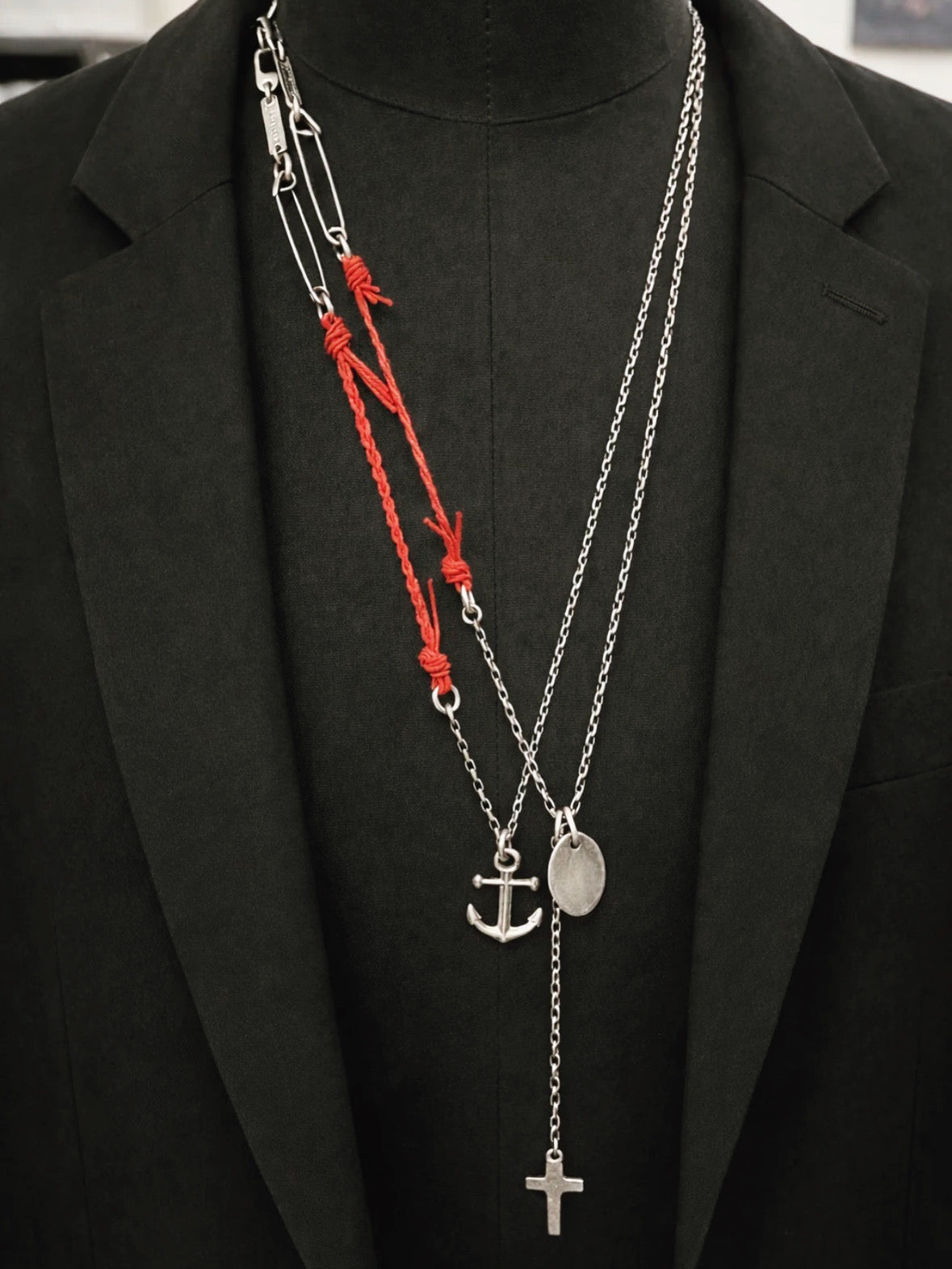
Mending has always been more than a technique for me — it’s a philosophy. I’m drawn to objects that have lived a life before they reach my hands. Patched clothing, mismatched chain necklaces, repaired furniture, worn blankets — the imperfect is where the character lives.
The Mended Collection grew from my love of visible mending, reclaimed garments, and modern relic design. Giving an object a new life feels like an act of care. Not restoring it back to perfection, but reinforcing what already exists.
The red was haunting me - I chose it because its associated with spiritual protection against misfortune, negative energy, or the "evil eye". It represents luck, courage, and strength, and is often tied to signify connection.
I’ve never been interested in flawless surfaces. I’m interested in endurance.

I’ve always been drawn to things that have lived a life before they reach me.
Mending has become a defining part of my work — a process rooted in visible repair, reclaimed garments, and the idea of modern relic design. The Mended Collection explores slow fashion through hand-stitched reinforcement, reworked vintage clothing, and pieces shaped by time rather than perfection. Instead of hiding wear, I’m interested in honoring it — allowing history, texture, and imperfection to become part of the final object. This collection reflects my ongoing exploration of modern relic clothing, artisan mending, and the quiet power of extending an object’s life.
A worn sleeve. A necklace made from mismatched chains. A blanket with a visible patch. A chair repaired instead of replaced. The imperfect has never felt unfinished to me — it feels honest. It carries evidence of time.
Mending, for me, isn’t just a technique. It’s an instinct.
I love it across every category — clothing, furniture, jewelry, objects, fragments. Giving something a new life feels like an act of care. Not restoration back to perfection, but reinforcement of what already exists. A continuation, not a reset.
The Mended Collection grew from that place.

How the Mended Collection Came Together
Every piece in this collection began as something already lived in.
Vintage garments, reclaimed textiles, existing structures — materials that already carried history. Instead of starting from nothing, I worked by responding to what was already there.
Some pieces were reinforced with hand stitching.
Some were reconfigured or layered.
Others were subtly altered — small interventions meant to extend their life rather than erase their past.
Nothing is mass-produced. Nothing is identical.
Each object moves forward altered, but still intact.
How the Mended Collection Is Made
Each piece in the Mended Collection begins with an existing garment or material that already holds history. Instead of starting from new fabric, I work in response to what’s already there.
Reclaimed garments and vintage textiles
Hand stitching and visible reinforcement
Subtle alterations designed to extend longevity
One-of-a-kind construction
Nothing is mass produced. No two pieces are identical. Every object moves forward altered, but still intact.
This process reflects my broader practice of creating modern relic clothing and reworked wearable objects.

Why I’m Drawn to the Imperfect
Visible Mending and the History of Making Things Last
Before fast fashion and disposable design, people repaired what they owned. Materials were limited. Clothing was reinforced, stitched again, rebuilt over time. Jewelry chains were extended. Garments were patched instead of replaced.
When I think about historical dress and utilitarian objects, I imagine pieces assembled from fragments — layered textures, improvised repairs, and garments shaped by necessity.
Visible mending turns wear into identity.
A repaired seam becomes part of the design.
A mismatched link becomes intentional.
A reinforced area becomes evidence of survival.
Mending isn’t about hiding flaws — it’s about honoring what endures.
older I get, the less interested I am in flawless surfaces.
Perfect objects can feel distant — untouchable, almost sterile. But a repaired piece feels human. It carries weight and memory. It shows that something mattered enough to be kept.
I’ve always believed that character lives in the tension between refinement and wear — between elegance and survival. That balance has shaped everything I create, from jewelry to home objects to clothing.
A patched jacket.
A necklace rebuilt from fragments.
A garment altered instead of discarded.
These aren’t just aesthetic choices. They reflect how I see the world.

The Beauty of the Visible Repair
We live in a culture that tells us to replace things quickly — to hide wear, to erase age, to move on to something new. But historically, people worked with what they had. Materials were limited. Clothing was repaired over and over. Chains were rebuilt. Objects evolved through necessity.
When I think back in time, I imagine pieces assembled from fragments — patched garments, layered textures, improvised solutions that became part of someone’s identity.
There’s something powerful about a repair you can see.
A visible stitch becomes a story.
A mismatched link becomes a design choice.
A reinforced seam becomes a symbol of endurance.
Mending isn’t about disguising damage. It’s about honoring the life that came before.
The Imperfect as Design Language
My work has always lived between refinement and wear. That tension — polished yet weathered — is where I find meaning.
A patched jacket carries more presence than a perfect one.
A necklace rebuilt from fragments holds more story than something untouched.
These choices reflect a deeper interest in slow fashion, reclaimed materials, and modern relic jewelry — objects shaped by time rather than trends.
The imperfect isn’t unfinished. It’s alive.

Slower Pieces, Made When They’re Ready
This collection isn’t built on volume. It’s built on timing.
I create pieces when the materials and the moment feel aligned — when a garment or object suggests what it wants to become next. That means fewer releases and smaller offerings, but also more intention.
Slower work allows the process to stay honest.
It keeps me connected to why I started creating in the first place — not to chase perfection, but to shape objects that feel grounded, worn-in, and real.


Mending as a Philosophy
For me, mending goes beyond objects.
It’s about seeing value where others see wear.
It’s about resisting disposability.
It’s about choosing continuation over replacement.
There’s something deeply human about repair — about acknowledging that time changes everything, and that change doesn’t diminish worth.
If anything, it adds to it.
The pieces in this collection aren’t trying to look new. They’re meant to feel lived-in, resilient, and quietly strong.
Not broken. Just carried forward.

What Is Visible Mending in Modern Relic Clothing?
Visible mending is the practice of repairing garments in a way that allows the repair to remain part of the design. Instead of concealing wear, stitches, patches, and reinforcements become intentional elements. In my work, visible mending connects historical utility with contemporary design — blending reclaimed materials, slow fashion principles, and hand-finished construction into pieces that feel lived-in and enduring.
visible mending clothing, modern relic fashion, reclaimed garments, slow fashion repair, reworked vintage clothing, artisan mending, hand-stitched garments, modern relic jewelry, repaired clothing design.
The Mended Collection reflects my ongoing exploration of modern relic clothing, visible mending, reclaimed garments, and slow fashion design.